
Roofing materials · Tile
Tile Roofing in Utah
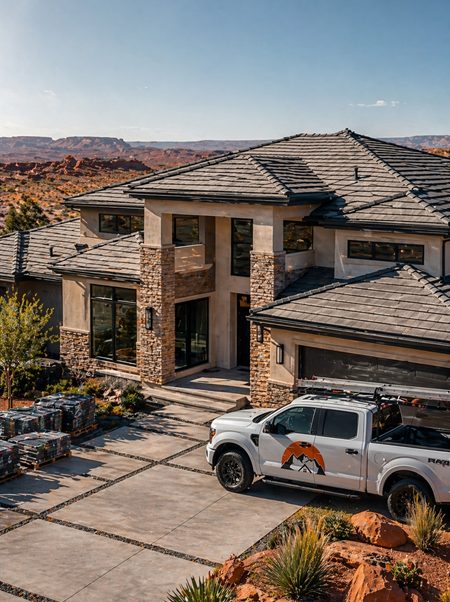
Tile roofs define much of Southern Utah. The tile itself can last a very long time — but the underlayment beneath it does not. Most tile roof leaks start in the layers you cannot see.
5.0 on Google
19 reviews
20+ years construction experience
Roofing-first construction
Utah offices
St. George and Sandy
Residential & commercial
Roofing, storm restoration, exteriors
How tile works
The Tile Sheds Water. The Underlayment Keeps It Out.
Concrete and clay tiles protect the roof from sun and shed most of the water, but they are not watertight. Underneath, the underlayment is the real waterproofing layer, and under the intense Southern Utah sun it ages long before the tile does.
That is why many tile roofs leak while the tile still looks fine. Restoring them often means carefully lifting the tile, replacing the underlayment and flashing, and reinstalling sound tile.
Common issues
Why Tile Roofs Leak
Most tile roof problems fall into a handful of patterns.
Worn underlayment
Dried, brittle, or torn underlayment lets water reach the deck even when tiles are intact.
Cracked or slipped tile
Foot traffic, hail, or failed fasteners leave gaps where water and debris get in.
Valley and wall flashing
Rusted or poorly detailed metal at valleys, walls, and chimneys is a frequent leak source.
Ridge and hip details
Mortar or ridge components can crack or loosen over time.
Debris dams
Leaves and debris trapped behind tile can redirect water under the roof.
Low-slope tile
Tile installed on slopes that are too shallow is more prone to wind-driven leaks.
Inspection
What We Check on a Tile Roof
Walking a tile roof incorrectly breaks tile. Inspection is done carefully, with attention to what is under the surface.
- Broken, cracked, or slipped tile
- Exposed underlayment condition
- Valley and pan flashing
- Ridge and hip components
- Penetrations and skylights
- Interior signs of past leaks
Scope
Repair, Re-Underlay, or Replace
Tile work is rarely all-or-nothing.
Tile repair
Replacing broken or slipped tile and fixing localized flashing on an otherwise sound roof.
Lift and re-lay
Removing tile, installing new underlayment and flashing, and reinstalling the existing tile along with replacements as needed.
Full replacement
New tile or an alternative material when tile is discontinued, badly damaged, or the roof needs a different system.
Southern Utah
Built for Sun, Tested by Monsoon Season
In St. George, Washington, Santa Clara, and Ivins, tile is common because it handles heat and suits the architecture. Constant UV exposure is what wears out underlayment.
Summer monsoon storms bring sudden heavy rain and wind, which is often when weak underlayment and flashing finally show up as interior leaks.
Storm-Cracked Tile
Hail and wind can crack or dislodge tile. Damaged tile should be addressed quickly so the underlayment is not left exposed to sun and rain.
What to expect
The Tile Roof Process
Inspect
We look at the roof, the attic or underside where accessible, and the details that usually fail first.
Explain
You get photos and a plain explanation of what we found and what it means.
Scope
We recommend a repair or replacement scope that fits the actual condition — not the largest possible job.
Build
The work is completed, the site is cleaned up, and the finished roof is reviewed with you.
Keep exploring
Compare Other Roofing Materials
Stone-Coated Steel
Steel panels with a textured finish that mimics shake, tile, or shingle.
Learn moreMetal Roofing
Panel systems that shed snow and handle long, hot summers.
Learn moreAsphalt Shingles
The most common residential roof in Utah, with the widest range of styles and budgets.
Learn moreRoof Repair
Leaks, missing shingles, flashing failures, and localized damage.
Learn moreNext step
Start With a Tile Roof Inspection
Tell us what you are noticing — leaks, broken tile, or just an aging roof. We will follow up to schedule a look.
Questions
Tile Roofing FAQs
Where we work
Tile roofing across Utah
Served from our St. George office in Southern Utah and our Sandy office on the Wasatch Front. Pick your city for local roofing details.