Utah roof repair
Roof Repair in Utah
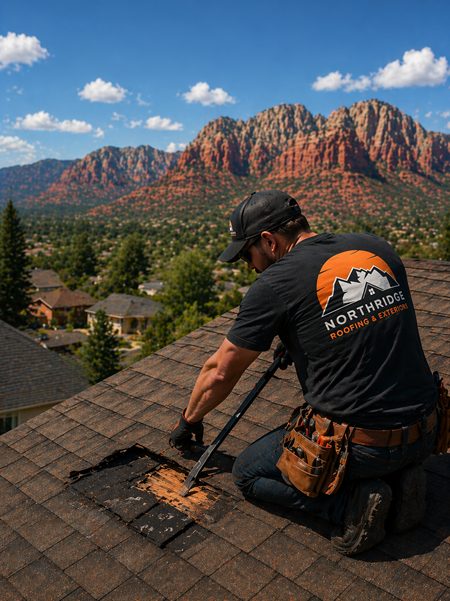
Northridge Roofing & Exteriors provides roof repair services throughout Northern and Southern Utah for leaks, damaged shingles, flashing issues, storm damage, and other roofing problems.
5.0 on Google
19 reviews
20+ years construction experience
Roofing-first construction
Utah offices
St. George and Sandy
Residential & commercial
Roofing, storm restoration, exteriors
What we fix
Roofing Problems We Repair
Most roof repairs fall into a handful of categories. The hard part is usually finding where the water is actually getting in.
Roof leaks
Water showing up on ceilings, in attics or down walls.
Missing shingles
Blow-offs that leave underlayment or decking exposed.
Lifted shingles
Creased or unsealed tabs that no longer shed water properly.
Flashing problems
Failed flashing at walls, chimneys, valleys and roof-to-wall joints.
Vent & penetration leaks
Cracked pipe boots, failed collars and worn seals around penetrations.
Wind damage
Torn, folded or displaced roofing after a high-wind event.
Hail damage
Impact bruising and granule loss that shortens shingle life.
Damaged ridge caps
Cracked or lifted caps along the ridge line and hips.
Tile damage
Broken, slipped or improperly repaired tile and the underlayment beneath it.
Flat roof leaks
Seam separations, ponding and membrane punctures on low-slope roofs.
Warning signs
Signs Your Roof Needs Attention
If you notice any of these, it is worth having the roof looked at before the next storm or the next freeze.
- Water stains on ceilings or walls
- Drips or damp insulation in the attic
- Granules collecting in gutters or at downspouts
- Shingles that look dark, curled, cracked or missing
- Daylight visible through the roof deck in the attic
- Sagging areas on the roof plane
- Damaged or rusted flashing and exposed nail heads
- Debris, branches or hail strikes after a storm
Leaks
Roof Leak Repair
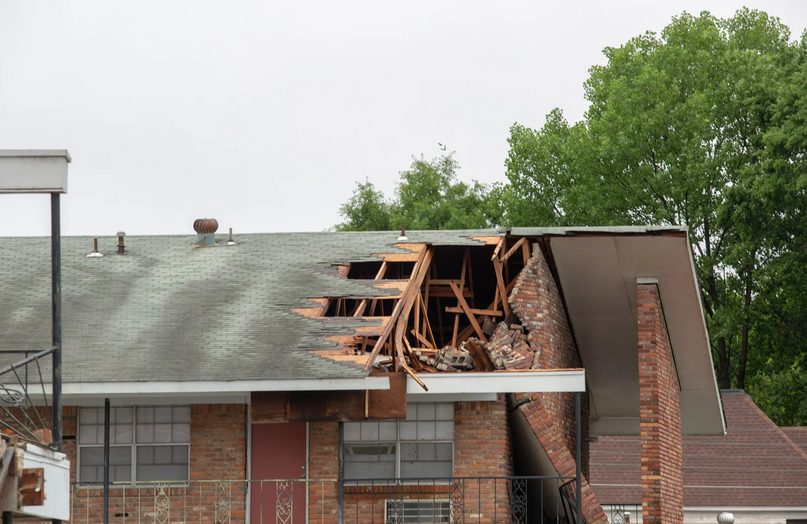
A roof leak is rarely where you think it is. Water enters at a failure point — flashing, a cracked pipe boot, a lifted shingle, a valley — then travels along decking and framing until it finds a place to drop through.
That means the ceiling stain in your hallway may be several feet away from the actual entry point on the roof. Sealing the drywall or the spot directly above the stain does not fix anything. We trace the path back to the source, repair the failure and then address the resulting damage.
Is the leak always directly above the stain?
No. Water can travel a long way before it becomes visible inside.
Should I wait for the next rain to see if it leaks again?
No. Each cycle adds damage to decking, insulation and drywall.
After a storm
Storm-Related Roof Repair
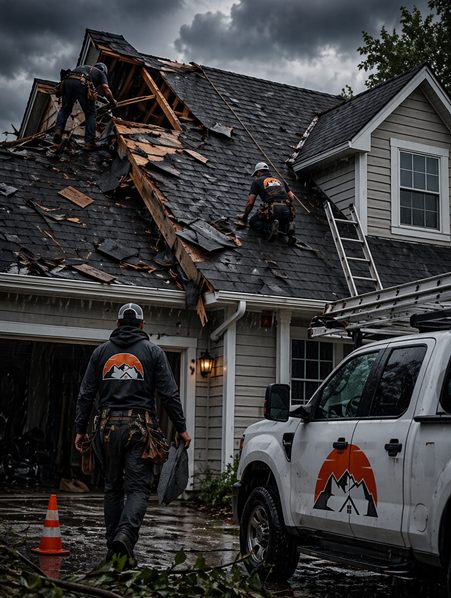
Hail bruises shingles and knocks off the granules that protect them. Wind creases and unseals tabs that still look fine from the driveway. Both shorten the life of the roof and can open paths for water long before you see anything inside.
After a significant storm, an inspection documents what happened while the evidence is still fresh — which matters whether you repair out of pocket or go through insurance.
Straight answer
Can It Be Repaired Without Replacement?
Sometimes, yes.
Plenty of roofs are repaired and go on serving for years. Whether yours is one of them comes down to six things.
Extent of damage
Damage confined to one slope, valley or penetration is very different from damage across every plane of the roof.
Age and condition
A roof with years of life left is worth repairing. A roof at the end of its service life often is not.
Material matching
Some shingles, tile profiles and metal panels can be matched well. Others have been discontinued or have weathered too far.
Location of damage
Valleys, transitions and roof-to-wall areas are more complicated to repair correctly than an open field of shingles.
Underlying issues
If decking, underlayment or ventilation has failed, surface repairs will not solve the problem.
Storm scope
Insurers and roofing systems both treat isolated damage differently from widespread storm damage.
Process
The Roof Repair Process
Inspect
We get on the roof, trace the source of the problem and photograph the conditions.
Explain
You see the photos and hear what is actually happening, in plain language.
Scope
We put the repair scope and materials in writing before any work starts.
Repair
The crew completes the repair with the right method for that roofing material.
Verify & clean
We check the repair, clean the work area and sweep for nails.
Materials
Roof Types We Repair
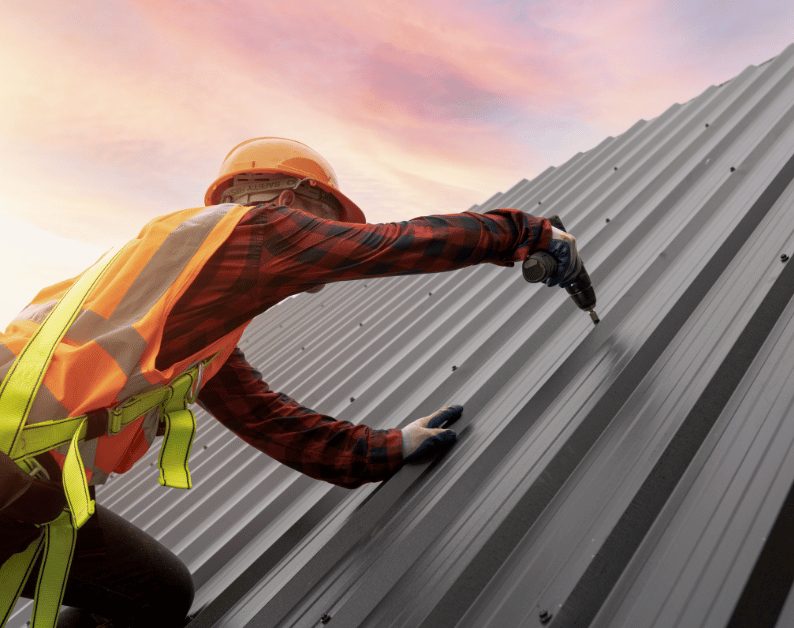
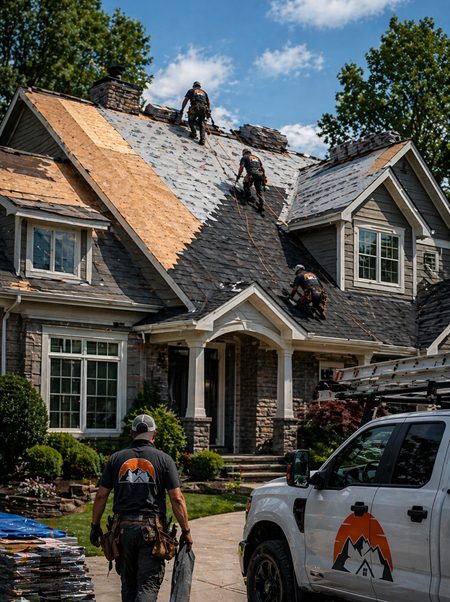
Each roofing system fails differently and has to be repaired differently. Walking a tile roof the wrong way creates new damage; sealing a metal panel like a shingle roof does not last.
Service area
Roof Repair Across Utah
Northridge works out of offices in Sandy and St. George and repairs roofs across the Wasatch Front and Southern Utah.
FAQs
Roof Repair FAQs
- Free roof inspection before any repair
- Photos of what we find on your roof
- Written repair scope before work starts
- Nail sweep and cleanup when we finish
Have a roof leak or storm damage?
Northridge will inspect the roof, find the source and tell you whether a repair will actually solve it.